myco
connecting non-profits, cultivating change
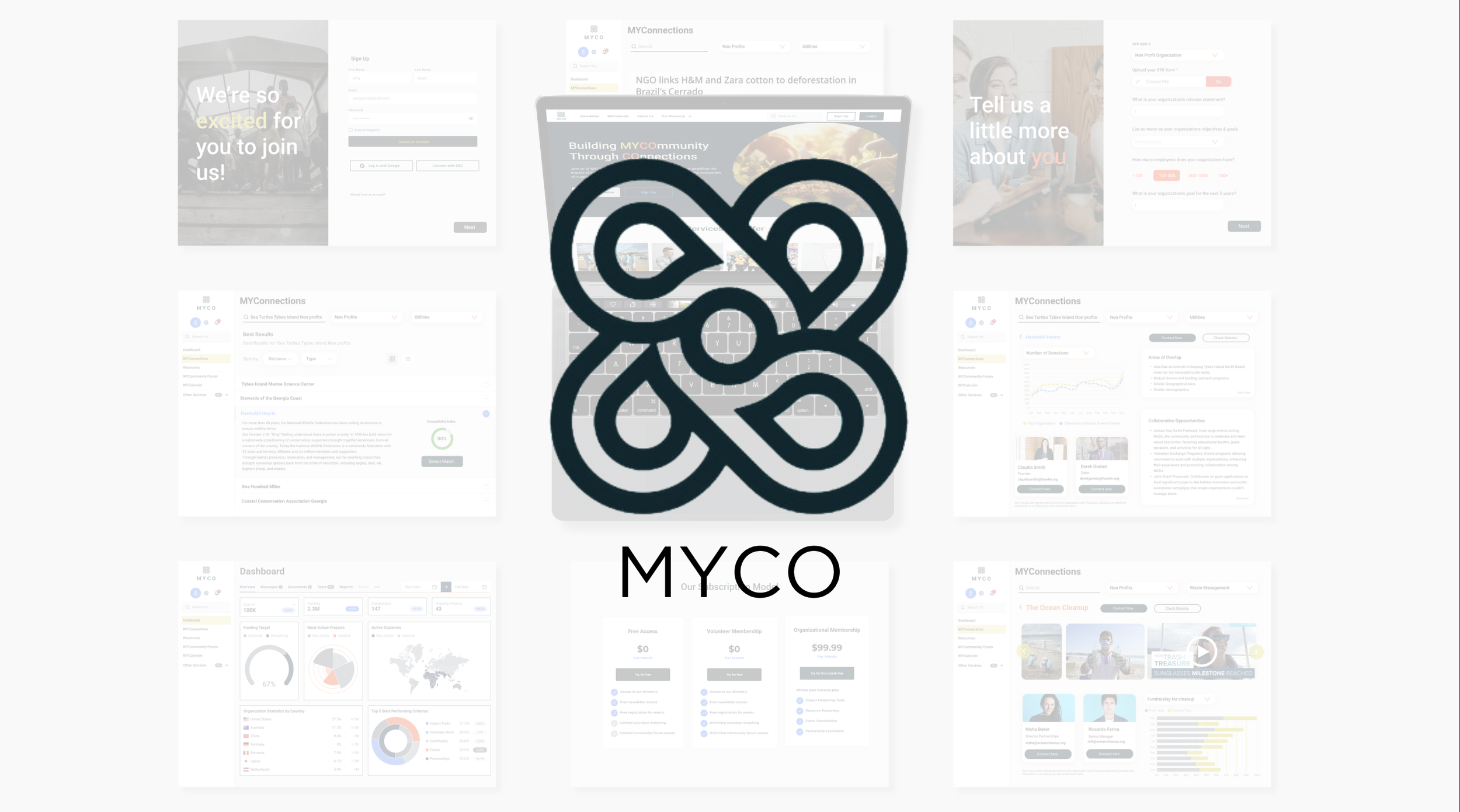
project overview: myco is an innovative platform inspired by the symbiotic networks of mycorrhizal fungi. Designed for non-profit organizations, it facilitates resource sharing, volunteer matching, and collaboration to maximize community impact. By integrating biomimicry principles and digital innovation, MYCO addresses critical gaps in resource management and inter-organizational coordination.
objective: to empower non-profits with a centralized platform that streamlines resource exchange, fosters partnerships, and enhances operational efficiency to amplify their impact.
Sept- Nov 2024
Stakeholders: SCAD, Apple, Smartphone users
Part 2 coming soon

Role: Sustainable Strategist and Service Designer
Timeline: 10 weeks
what i did:
biomimicry integration: applied life principles from mycorrhizal fungi to create a decentralized, adaptable, and resilient platform model.
primary research: conducted interviews, site explorations, and case studies with non-profits to identify challenges in resource sharing and collaboration.
service design: developed user journey maps, stakeholder engagement frameworks, and onboarding processes to ensure inclusivity and accessibility.
UI design: designed a user-friendly interface with dashboards, volunteer matching tools, and impact metrics for seamless navigation and monitoring.
gamification: integrated features like compatibility indices, collaboration opportunities, and progress tracking to incentivize participation and foster long-term engagement.
system mapping: created a stakeholder map using influence-interest matrices to identify and prioritize engagement strategies.
strategy & methodologies
-
Methodologies
Stakeholder Mapping
Developed a comprehensive stakeholder engagement framework using influence-interest matrices and concentric circle models. Identified core, operational, support, and indirect stakeholders to tailor engagement strategies effectively.
User Journey Mapping
Designed detailed user journeys for non-profits, volunteers, and community partners, covering stages like awareness, onboarding, engagement, and long-term collaboration.
Service Blueprinting
Mapped the end-to-end service processes, including user actions, platform touchpoints, and back-end system operations, to ensure a seamless experience.
Co-Creation Workshops
Collaborated with non-profit representatives to ideate and validate platform features, ensuring alignment with their needs and challenges.
Touchpoint Analysis
Identified critical interaction points, such as the onboarding process, dashboard navigation, and volunteer matching, to optimize user experience and functionality.
System Thinking
Applied a holistic approach to connect resource-sharing mechanisms, volunteer engagement, and partnership facilitation in a cohesive ecosystem.
Prototyping and Testing
Developed interactive prototypes of the platform, including dashboards, compatibility indices, and volunteer matching features, and refined them through user testing.
Gamification Integration
Designed features like AI-driven collaboration suggestions, compatibility indices, and progress tracking to incentivize participation and foster user engagement.
Empathy Mapping
Used empathy maps to understand the motivations, frustrations, and needs of non-profits and volunteers, ensuring user-centric design solutions.
Metrics and Feedback Loops
Integrated tools for non-profits to track funding goals, project success, and volunteer contributions, fostering accountability and data-driven decision-making.
-
Methodologies
Biomimicry Principles
Inspired by mycorrhizal fungi networks, MYCO adopts decentralized resource sharing and adaptability, mimicking natural systems to optimize collaboration and efficiency.
Life’s Principles
Incorporated sustainability principles like resilience through variation and decentralization, using available resources efficiently, and cultivating cooperative relationships to design a platform that adapts to changing needs while fostering community growth.
Circular Systems Thinking
Focused on reducing redundancies and ensuring resources are reused effectively, minimizing waste across organizational operations.
Collective Impact Framework
Leveraged a structured approach to bring non-profits together under shared goals, enabling coordinated actions and measurable results. This framework fostered alignment and mutual reinforcement among diverse stakeholders.
Blue Ocean Strategy
Identified unaddressed opportunities in the non-profit sector, such as resource-sharing gaps and collaboration inefficiencies, to create a "blue ocean" of untapped potential. MYCO differentiated itself by offering integrated tools for collaboration, resource sharing, and impact measurement.
Value Proposition Canvas
Ensured MYCO’s offerings aligned with the needs of non-profits and volunteers by mapping out their pains, gains, and required jobs. Solutions like compatibility indices, AI-generated collaboration opportunities, and centralized dashboards addressed these effectively.
Gamification for Engagement
Designed features like progress tracking, volunteer leaderboards, and compatibility indices to promote sustained engagement and foster long-term behavior change among users.
Impact-Driven Design
Integrated tools for tracking funding goals, project metrics, and volunteer contributions to enable non-profits to showcase their impact and drive data-based decision-making.
Collaborative Innovation
Encouraged partnerships among non-profits through tools like AI-driven collaboration suggestions, fostering a shared ecosystem for resource optimization and collective action.
Sustainability Metrics and Feedback Loops
Built mechanisms to measure resource efficiency and community impact, providing real-time feedback for users to make informed, sustainable decisions.
Scalable Design
Designed the platform to grow with non-profits, enabling the addition of new features and users without compromising efficiency or usability.


A Biomimicry Design Inspired by Mycorrhizal Fungi
The design of MYCO, a resource exchange platform for non-profits, is deeply rooted in the principles of biomimicry, specifically inspired by the mycorrhizal fungi networks found in nature. These fungi form intricate symbiotic relationships with plant roots, creating vast underground networks that exchange nutrients, water, and even warning signals, enabling ecosystems to thrive.
How MYCO Mirrors Mycorrhizal Fungi
-
Like fungi connecting plants, MYCO links non-profits to share resources, knowledge, and support.
-
MYCO dynamically connects non-profits with volunteers, donors, and partners, adapting to changing needs.
-
Non-profits share resources for mutual gain, reflecting fungi’s symbiosis with plants.
-
MYCO fosters collaboration and reduces redundancies, strengthening the non-profit ecosystem.
-
Dashboards and metrics mimic fungi’s feedback mechanisms, optimizing resource use and impact tracking.

why are we targeting non-profits?
myco emulates the collaborative and adaptable nature of fungi, addressing non-profits’ challenges like limited resources and competition. This biomimetic approach creates a scalable, resilient system that amplifies individual efforts and strengthens the broader community.
moreover non-profits face challenges such as limited budgets, volunteer dependence, and resource competition, often spending over 30% of resources on administrative overhead due to inefficient processes. Improved collaboration, which can increase resource availability by 40%, and access to data-driven tools for impact measurement are critical for enhancing efficiency and showcasing results.

website features
Dashboard Analytics: Offers insights on resource allocation, volunteer contributions, and community impact.
Customizable News Feed: Keeps users updated on relevant non-profit activities.
Volunteer Matching: Simplifies connecting individuals to causes.
Subscription Tiers: Offers options for free access, volunteer memberships, and organizational tools.
key features
Volunteer Management: Matches volunteers with opportunities aligned to their skills and interests.
Resource Repository: Centralized access to guides, templates, and operational tools.
Partnership Facilitation: AI-driven suggestions for collaboration between non-profits.
Impact Metrics: Dashboards to track funding goals, project success, and community outreach.
Training Support: Onboarding resources and learning modules tailored to non-profits.

project impact
Increased Resource Sharing: Streamlined processes for non-profits to access and allocate resources.

project takeaways:
collaboration is key: Addressing resource gaps requires tools that promote inter-organizational coordination and partnership building.
data-driven impact: Metrics and analytics empower non-profits to measure success, optimize resources, and showcase their contributions.
User-Centric Design: Platforms must be intuitive and adaptable to meet the diverse needs of non-profits, volunteers, and donors.
Biomimicry in Action: Applying natural principles like adaptability, decentralization, and feedback loops enhances platform efficiency and resilience.
Scalability Matters: Solutions must be designed to grow alongside the needs of non-profits, ensuring long-term relevance and impact.
Community Growth: Fostered partnerships and improved collaboration through intuitive features.

Operational Efficiency: Reduced redundancies and administrative burdens for organizations.